បុកក្បាល
Clinch Work — Bok Kbal
The clinch is the battleground that separates Kun Khmer from nearly every other striking art. While Western boxing breaks the clinch and karate avoids it entirely, Cambodian fighters embrace it as a primary offensive platform. From the clinch, Kun Khmer fighters unleash devastating knee barrages, brutal elbow attacks on the break, trips, throws, and sweeps. Mastering the clinch is not optional — it is the heart of the art.
ការចាប់កាន់ — បុកក្បាល
ទិដ្ឋភាពពីលើ និង ពីមុខនៃការចាប់កកម្រាមទ្វេបុកក្បាល
ផ្កា — ចាប់កកម្រាមទ្វេ
ទីតាំងចាប់កាន់លេចធ្លោ និង មូលដ្ឋាននៃរាល់ការវាយពីការចាប់កាន់
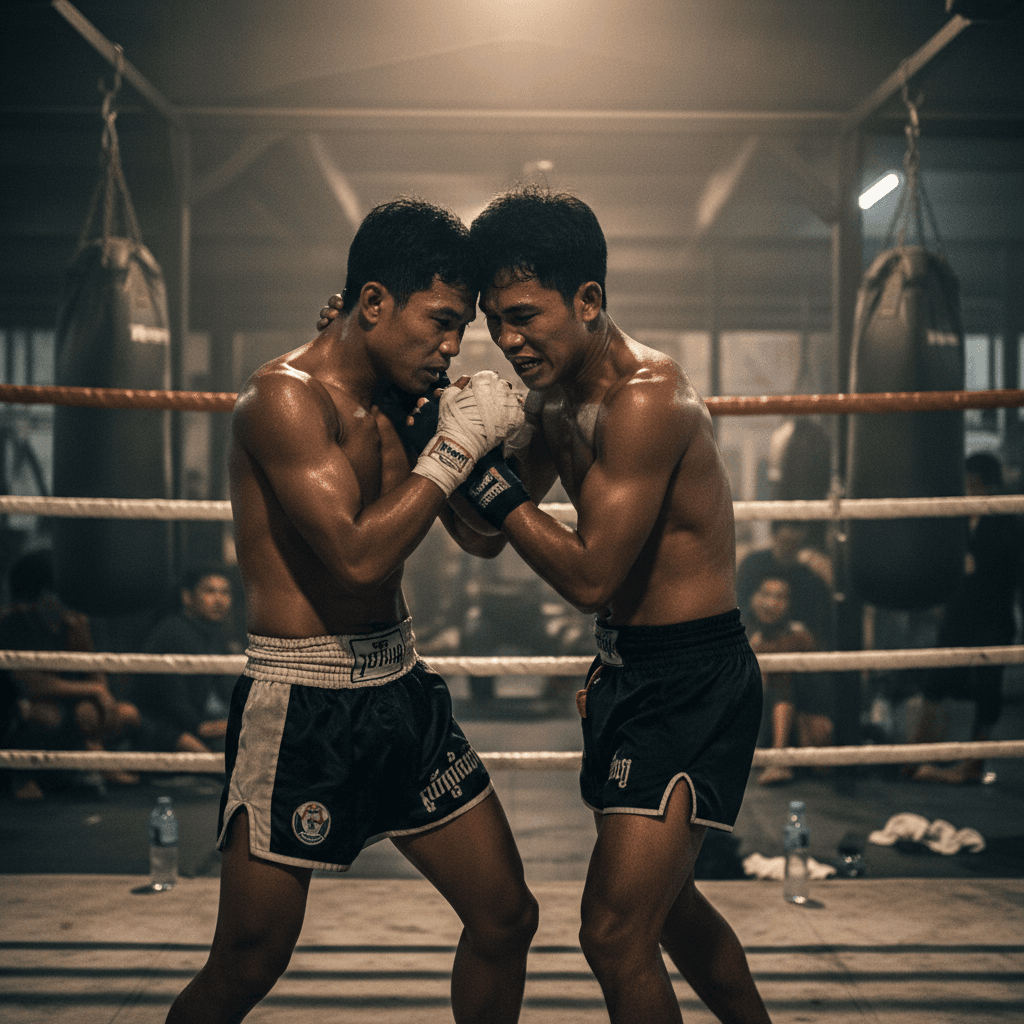
Understanding the Plum
The plum position, known as Bok Kbal (literally "hit the head"), is the double collar tie — both hands clasped behind the opponent's neck, fingers interlocked, elbows pinched tight against the opponent's collarbone. From this position, you control the opponent's posture, head position, and balance while having direct access to devastating knee strikes.
The plum is the most dominant clinch position in Kun Khmer. A fighter who secures the plum controls the fight. The interlocked hands behind the neck act as a steering wheel for the opponent's entire body — where the head goes, the body follows. This allows you to pull the opponent into knees, push them off balance for elbows, and manipulate their weight distribution for trips and throws.
Securing the Plum
To enter the plum from mid-range, close the distance with a jab-cross or a clinch entry combination. As you step into range, swim your hands inside the opponent's arms and clasp them behind the neck. The wrists cross, and the fingers interlock. Immediately pinch the elbows tight against the opponent's collarbones — this prevents them from posturing up and creates a cage around their head. Pull the opponent's forehead down toward your chest while keeping your own posture tall and upright.
Maintaining the Plum
The opponent will fight to break your grip. Maintain the plum by keeping your elbows tight, your grip strong, and your posture tall. If they try to posture up, pull them back down with a sharp tug. If they try to swim their arms inside, re-swim immediately — the battle for inside position is constant. Use your forehead pressure against the top of their head to keep them bent over. Fire knees continuously to punish any attempt to break free.
ទីតាំងខាងក្នុង ទល់នឹង ទីតាំងខាងក្រៅ
សមរភូមិចាប់កាន់សម្រាប់ការគ្រប់គ្រងដៃ និង ផលប៉ះពាល់យុទ្ធសាស្ត្រ
Inside Position (Dominant)
Inside position means your arms are inside the opponent's arms — closer to their neck and head. This is the dominant position because it allows you to control their posture and limits their offensive options.
- +Direct access to the plum (double collar tie)
- +Full control of the opponent's head position and posture
- +Optimal angle for straight and diagonal knees
- +Can pull the head down for downward elbows on the break
- +Easier to initiate trips and throws
Outside Position (Inferior)
Outside position means your arms wrap around the outside of the opponent's arms — around their body or over their shoulders. This limits your control and gives the opponent the inside track.
- -Cannot control the head effectively
- -Knees are blocked by the opponent's arms and elbows
- -Vulnerable to being pulled into knees yourself
- -Must swim inside to regain dominance or disengage
- *Body lock throws are available from outside position
The Swimming Drill
"Swimming" refers to the constant battle to get your arms inside the opponent's arms in the clinch. To swim, release one hand, dip the elbow under the opponent's arm, and re-establish your grip on the inside. The opponent will attempt the same. This back-and-forth arm fighting is a skill unto itself and should be drilled extensively. In Cambodian gyms, swimmers (clinch sparring drills) are a daily staple. The fighter who wins the swimming battle controls the clinch. Practice swimming with a partner for 3-5 minute rounds, focusing only on gaining and maintaining inside position without throwing strikes.
ការវាយជង្គង់ពីការចាប់កាន់
ប្រព័ន្ធអាវុធវាយលុកចម្បងពីទីតាំងបុកក្បាល
The clinch knee barrage is the signature of Kun Khmer. Once you secure the plum, the knees become your primary weapon. The key principle is pull and drive — pull the opponent's head and upper body downward and toward you while simultaneously driving the knee upward into their body. This creates a collision of forces that doubles the impact.
Straight Knee Barrage
From the plum, fire straight knees (Bok Chong Trong) in rapid succession — typically 3 to 8 knees in a burst. Pull the opponent's head down with each knee. Alternate left and right to maintain rhythm and balance. Target the solar plexus, ribs, and stomach. Each knee should penetrate deep into the body, not just tap the surface. The pace should be relentless — do not give the opponent time to recover or establish their own position between knees.
Diagonal Knee from the Clinch
When the opponent covers the center with their elbows, switch to diagonal knees (Bok Chong Chranh) that attack the sides of the body. Pull the opponent slightly to one side while driving the knee into the exposed ribs or liver. The diagonal angle bypasses the standard clinch defense of keeping the elbows tight. Alternating between straight and diagonal knees makes your offense unpredictable.
Pulling the Head into the Knee
The most devastating clinch knee technique is pulling the opponent's head downward into a rising straight knee targeted at the face. This requires pulling the head down far enough that the face is exposed, then timing the knee to meet the descending head. When executed correctly, this produces knockouts. However, it requires strong clinch control and precise timing. The opponent must be significantly broken down before this becomes available.
ការវាយកែងពេលផ្ដាច់
ការវាយកែងបំផ្លិចក្នុងពេលចូល ចេញ និង ផ្លាស់ប្តូរការចាប់កាន់
The transition into and out of the clinch is one of the most dangerous moments in a Kun Khmer fight. This is when elbows do their most devastating work. Cambodian fighters are masters at firing elbows during the split second when the clinch breaks, when they release one hand, or as they enter clinch range.
Horizontal Elbow on the Break
When the clinch breaks — either naturally, by referee command, or by your opponent pulling away — release one hand from the clinch and immediately slash a horizontal elbow (Bat Koun Troung) across the opponent's face. The opponent is typically still at close range and often has their hands down from the clinch battle. This is the single most common way cuts are opened in Kun Khmer competition. The key is speed — the elbow must fire the instant the clinch releases, before the opponent can re-establish their guard.
Upward Elbow on Entry
When entering the clinch, the upward diagonal elbow (Bat Koun Ler) can be thrown as the hands move toward the plum position. Step forward and drive the elbow upward between the opponent's guard as you close distance. This serves double duty — it damages the opponent and sets up your clinch entry. Even if the elbow is partially blocked, the impact opens space for your hands to swim inside.
Double Elbow to Break the Clinch
If the opponent has a strong clinch and you cannot win the swimming battle, the double elbow (Bat Koun Pi) can be used to blast free. Release both hands simultaneously and fire both elbows inward at the opponent's head. The impact creates space and often stuns the opponent enough to either re-engage on your terms or back away to reset at range. This is a desperation technique when you are losing the clinch battle.
ខាត់ទេវ
ការបោក និង ចាប់បោះ
ខាត់ទេវ — ប្រើការចាប់កាន់ដើម្បីបោកគូប្រកួត
Inside Trip
IntermediateThe inside trip is the most fundamental throw in the Kun Khmer clinch. From the plum or collar tie position, step your lead foot to the inside of the opponent's lead leg, placing it behind their ankle or calf. Simultaneously, push their upper body backward over your leg using your clinch grip. The combination of the upper body push and the lower body obstruction creates a lever that sends the opponent tumbling backward onto the canvas.
The inside trip is most effective when the opponent is pushing forward into you. Use their own forward momentum against them by redirecting it over your planted leg. The timing is critical — trip when they step or shift weight. After the trip, immediately follow up with ground knees or position yourself to strike as they rise.
Key Points
- +Step deep — your foot must be well behind their ankle
- +Push their upper body backward at the same time you block the leg
- +Use their forward momentum against them
- +Follow up immediately after the dump
Common Mistakes
- -Not stepping deep enough — the opponent steps over your leg
- -Trying to trip without controlling the upper body
- -Going for the trip when the opponent has balanced weight
Hip Throw
AdvancedThe hip throw is a powerful clinch technique where you pivot your body, load the opponent onto your hip, and rotate them over and onto the ground. In Kun Khmer, the hip throw is less common than the trip but far more spectacular. It is scored highly by judges and demoralizes the opponent.
To execute the hip throw, establish a strong clinch grip — typically one hand behind the neck and one controlling the arm. Pivot your body 180 degrees so your back is against the opponent's chest. Load their weight onto your hip by bending your knees and pulling them forward onto you. Then straighten your legs and rotate your upper body, pulling the opponent over your hip and onto the ground. The motion should be one explosive, fluid movement.
The hip throw requires excellent timing, hip positioning, and grip strength. It is most effective against opponents who are leaning forward heavily in the clinch. If you feel the opponent loading their weight onto you, redirect that energy over your hip. The risk is significant — a failed hip throw can put you in a terrible position — so it should only be attempted when the setup is right.
Body Lock Takedown
IntermediateThe body lock involves wrapping both arms around the opponent's torso — either around the waist or over one arm and around the body (an over-under). From the body lock, you can lift and dump the opponent, drive them backward, or rotate them to the ground. This is an outside-position technique, meaning it is available even when you lose the inside swimming battle.
Lock your hands behind the opponent's back using a gable grip (palm-to-palm) or an S-grip. Squeeze tight to compress their torso and limit their breathing. From here, you have several options: lift and turn them sideways to dump, drive forward and trip simultaneously, or arch backward to suplex (though suplexes are illegal in some Kun Khmer rulesets). The body lock is physically demanding but highly effective against opponents with superior clinch technique.
The body lock takedown is particularly useful late in fights when both fighters are fatigued. The controlling pressure of the body lock is exhausting for the opponent, and the dump scores well with judges even if the preceding clinch work was even. Many experienced Kun Khmer fighters use the body lock strategically in championship rounds.
ការបោកជើងពីការចាប់កាន់
ប្រើការចាប់កាន់ដើម្បីបំបាត់តុល្យភាព និង បោកគូប្រកួតដោយបោកជើង
Sweeps from the clinch are among the most valued techniques in Kun Khmer scoring. A clean sweep that puts the opponent on the canvas demonstrates superior technique and ring control. Judges award significant points for sweeps, especially when followed up with strikes.
Post-Kick Sweep
When the opponent throws a kick from the clinch or as the clinch breaks, catch or deflect the kicking leg and immediately sweep their supporting leg. The opponent is standing on one leg, making them maximally vulnerable to the sweep. Time the sweep the instant their kick extends — their weight is committed to the supporting leg, and a sharp sweep of that ankle sends them crashing down.
Push-Pull Sweep
From the clinch, push the opponent's upper body in one direction while sweeping their leg in the opposite direction. This creates a rotational force that is nearly impossible to resist. Push their right shoulder backward while sweeping their right leg forward, or push them left while sweeping the left leg. The push and sweep must happen simultaneously for maximum effect.
Knee Tap Dump
A subtle technique where you release one hand from the clinch and push behind the opponent's knee while pulling their upper body forward with the other hand. The knee buckles forward, and the opponent collapses. This is a finesse technique that requires timing rather than strength. It is most effective when the opponent is focused on the upper body clinch battle and not expecting a low attack.
យុទ្ធសាស្ត្រប្រឆាំងការចាប់កាន់
ការការពារ និង គេចចេញពីការចាប់កាន់របស់គូប្រកួត
Defending the Clinch Entry
The best clinch defense is preventing the clinch from being established. As the opponent closes distance, use a stiff jab or teep to the body to create space. If they get their hands on you, immediately fight for inside position by swimming your arms inside theirs. Frame against their biceps with your forearms to create space and prevent them from locking their hands behind your neck.
Breaking the Plum
If the opponent secures the full plum, you must break their grip immediately. The primary method is to push your forearm or palm against their chin or chest while stepping your hips backward to create space. Simultaneously, swim one arm inside their grip and pry their hands apart. Another option is to duck under and out of the clinch, though this risks eating a knee on the way down.
The two-on-one break is highly effective: grab one of the opponent's wrists with both hands and rip it away from behind your neck. Once you break one hand free, immediately establish your own inside position or disengage completely. Never stay in a broken clinch position — either re-engage with advantage or get out.
Posture and Frame
Good posture is your first line of defense in the clinch. Keep your head up, back straight, and hips low. If you allow the opponent to bend you over, their knees become devastating. Frame against their arms and body to maintain space. Use your forehead against their chest or shoulder to create a wedge that prevents them from pulling you down. A strong frame turns the clinch from a nightmare into a neutral position.
Exiting the Clinch
When exiting the clinch, always exit with offense. Throw an elbow or short punch as you disengage. Never simply pull away passively — a naked exit invites the opponent to fire a parting elbow or knee. Step back at an angle (not straight back) while throwing a short strike. Once at mid-range, reset your guard and re-establish your preferred fighting distance. The clinch exit is one of the most dangerous moments in a fight — treat it with the same seriousness as the clinch itself.
"The clinch is where Kun Khmer fighters show their true character. Anyone can throw a punch at range. But the clinch demands strength, technique, endurance, and an iron will. In the plum, there is no hiding — only the stronger fighter prevails."
— Cambodian training philosophy