ការហ្វឹកហាត់
Training — Kar Fwik Hat
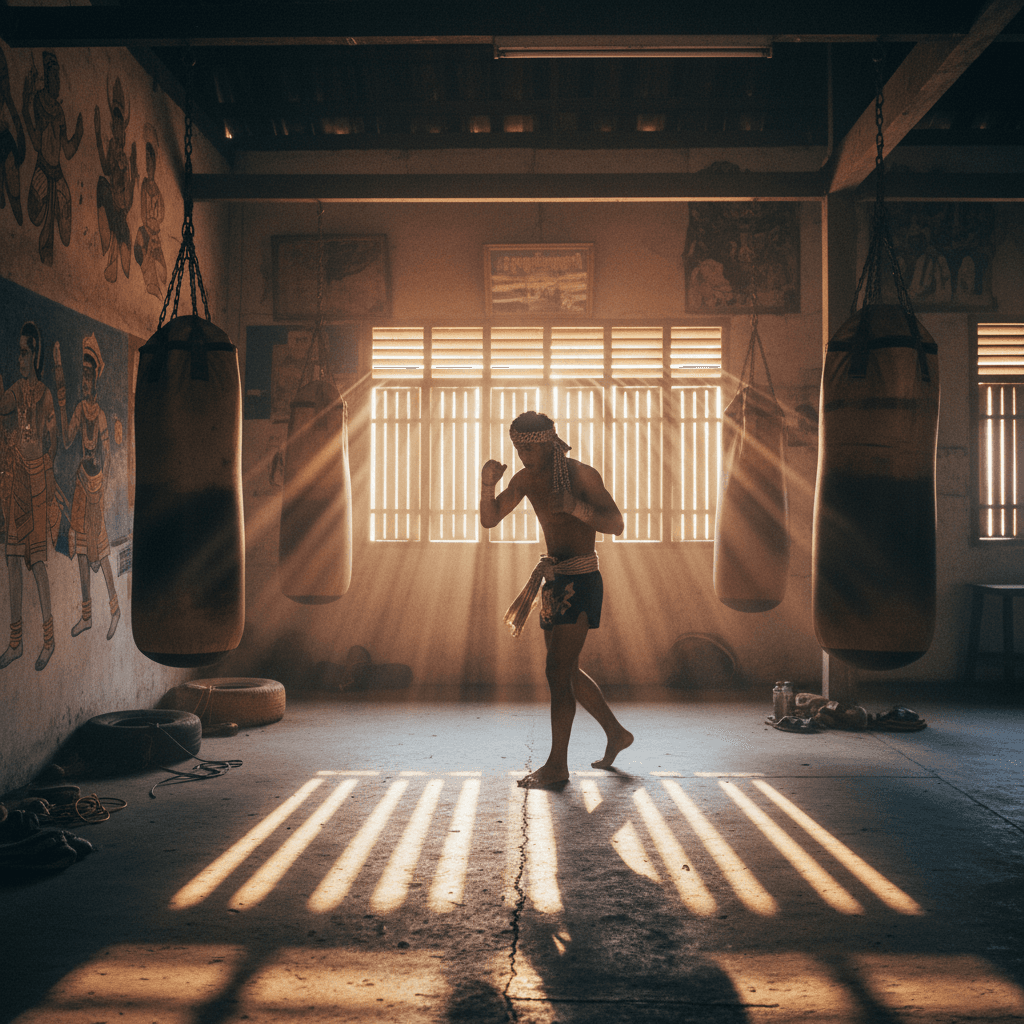
Traditional Kun Khmer training is both physically demanding and spiritually disciplined. A typical gym session combines strength conditioning, bag work, technical drilling, pad rounds, clinch practice, and — for fighters nearing competition — live sparring. The structure of your training depends entirely on your goals and current level.
The Kun Khmer Bible offers three structured programs: an 8-week Beginner Program for those new to the art, a 12-week Intermediate Program that introduces combinations and clinch work, and a 16-week Advanced Fight Camp for competitors preparing for the ring. Each program is designed around authentic Kun Khmer methodology.
Beyond the structured programs, you'll find dedicated guides for shadow boxing, bag work, sparring safety, and conditioning — the essential skills every serious practitioner must develop.
Kun Khmer training starts with stance, footwork, basic strikes, pad work, bag rounds, clinch control, and conditioning, then builds toward sparring or fight-camp work according to your level.
ទស្សនវិជ្ជា
Training Philosophy
The principles that guide authentic Kun Khmer training
Kun Khmer training is built around three principles: technical repetition (drilling the basics until they become reflex), conditioning (the cardiovascular and physical base that lets technique work under pressure), and cultural integration (the Wai Kru, the Kru relationship, and the spiritual framework that distinguishes Cambodian combat training from Western sport).
This section covers everything from your first day in the gym through advanced fight camp. Pick the program that matches your level and goal — beginner foundations, intermediate development, or full periodized fight prep — then layer in the specialized guides on shadow boxing, bag work, sparring, conditioning, recovery, and mental training.
Repetition Before Innovation
Kun Khmer gyms drill the basics thousands of times before introducing anything advanced. A jab thrown ten thousand times becomes a weapon. A jab thrown ten times is just an arm movement. Trust the process and embrace the monotony of mastery.
Two-a-Day Training Culture
Traditional Cambodian fight camps train twice daily: morning sessions focus on running and conditioning, while afternoon sessions emphasize technical work, pad rounds, and sparring. This rhythm has produced champions for generations.
The Wai Kru Is Training
The pre-fight dance is not separate from training — it is training. The Wai Kru builds balance, coordination, mental focus, and connection to tradition. Every serious practitioner learns and practices the Wai Kru as part of their development.
Respect the Mongkol
The headband worn before a fight represents the bond between student and teacher. Training in Kun Khmer is not just physical — it is a relationship of trust, discipline, and mutual respect between the fighter and their kru.
Conditioning Is Non-Negotiable
A technically skilled fighter who gasses out in round three loses to a conditioned fighter with basic technique. Cambodian gyms build an enormous aerobic base through running, skipping rope, and high-volume pad work before anything else.
Sparring With Purpose
Every sparring round should have a goal: practice a new combination, work on defense, develop timing, or simulate fight pressure. Going hard without direction builds bad habits. Going light with intention builds champions.